The ability to identify genomic alterations that may be missed by conventional methodologies highlights this technology’s potential for a more complete characterisation of disease and better patient stratification.
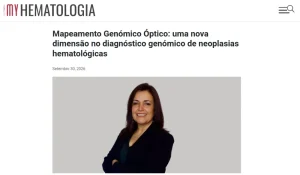
Optical Genome Mapping (OGM) is gaining relevance in the diagnosis of haematological neoplasms by allowing a more comprehensive analysis of the genomic alterations associated with these diseases. This is the central theme of the opinion piece by Sónia Pereira, Product and Applications Manager at Quilaban, published in My Hematologia under the title “Optical Genome Mapping: a new dimension in the genomic diagnosis of haematological neoplasms”.
Given the limitations of conventional methodologies, OGM makes it possible to analyse the genome at high resolution and to identify, in a single test, different types of structural alterations, including some that may not be detected by other techniques.
Two recent scientific publications reinforce the potential of this approach, notably a study of 150 patients with acute myeloid leukaemia and myelodysplastic syndromes. In this study, the technology provided additional information in 80% of cases and contributed to the reclassification of 33 patients.
Integrating OGM into a diagnostic strategy that combines different methodologies, according to the needs of each clinical situation, could contribute to a more accurate classification of haematological neoplasms and better patient stratification.
Read the full article at My Hematologia.